The Prayer Study
- A groundbreaking initiative at the intersection of spirituality, anthropology, phenomenology, and neuroscience.
- A team of neuroscientists and anthropologists at Stanford, Harvard, and McGill Universities, facilitated by Dr. Josh Brahinsky, using cutting-edge techniques from consciousness research to study prayer & meditation.
- Exploring how prayer may promote relaxation, cognitive flexibility, self-transcendence, and compassionate community, both universal and parochial.
The Brain Research
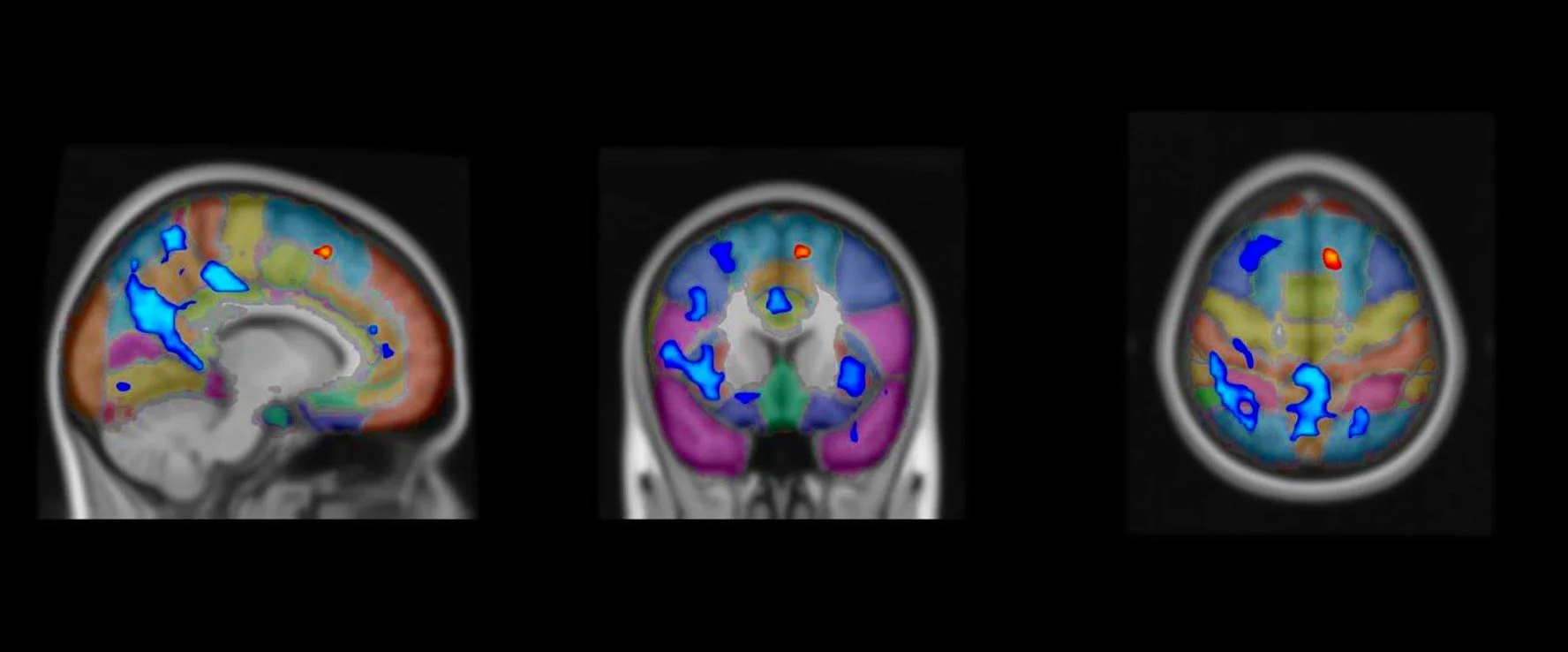
Utilizing cutting-edge neuroscientific and phenomenological techniques developed in the study of meditation and consciousness, we delve into the less-charted domain of Christian prayer. We have preliminary significant findings showing that speaking in tongues involves letting go (preSMA deactivation) and cognitive loosening (Increased divergent thinking). Our goal is to explore the potential of prayer for enhancing compassion, relaxation, fostering self-transcendence and boosting cognitive flexibility, and shaping the balance between universalist and parochial experience of compassion and community.
The Book
Tongues of Fire: How Charismatic Prayer Changes Evangelical Brains and Inspires Spirit-Filled Activism by Josh Brahinsky is due out from Bloomsbury Press in January of 2026
The Survey
For people who want to be involved in the next studies, please fill out this form and we will be in touch with an online survey, and depending on where you live, perhaps with an offer for participation in an in-person study.
Whether you’re a scientist, a person of faith, or simply curious, we welcome you to explore with us.
The Podcasts
This gets you to lectures and podcasts related to the prayer study
The Blog
See blogs posts about the research and recent lectures here.
The Mission/Methods
Our research method involves what we call “community engaged neurophenomenology”. That means we design our studies in close dialogue with the people involved and affected. We develop our questions and analyze our findings together. Also, we believe that neuroscience can only measure so much, so the details of our participant’s experiences matter tremendously – that is what we call phenomenology, or a focus on the phenomenal.
Tongues of Fire: How Charismatic Prayer Changes Evangelical Brains and Inspires Spirit-Filled Activism by Josh Brahinsky is due out from Bloomsbury press in January of 2026
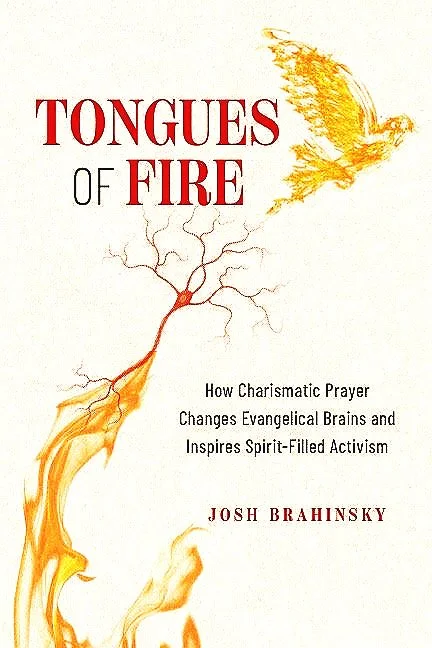
Tongues of Fire:
How Charismatic Prayer Change Evangelical Brains and Inspires Spirit-Filled Activism
Bloomsbury Press
In the autumn of 2005, I began a study of the mind-body training of the charismatic evangelicals, a group of Christians well known for their practice of speaking in tongues–prayer that involves non-semantic utterances and an altered state of mind. Immersing myself in churches, missionary training schools, and revivals, I sought the story behind the vitality and expansive growth of this community, which had burgeoned from a few thousand to nearly half a billion adherents in the preceding century, profoundly influencing U.S. culture and politics.
Tongues of Fire: How Charismatic Prayer Changes Evangelical Brains and Inspires Spirit-Filled Activism (Bloomsbury Press) is the result: it moves between neuroscience and the prayer circle in search of something a bit like surrender.
Surrender — it is about how charismatic Christians train their minds and bodies to let go and speak in tongues; how that training compares to meditation and psychedelics in releasing the boundaries of selfhood; what scanning the brains of practitioners who are in the midst of prayer can and cannot tell us about spiritual experience; and how the communal dimensions of that experience shaped a movement that began as a radical, interracial experiment at the margins of American culture — and has since become a crucial pillar of contemporary politics.
Along the way, I try to show how something like the theological idea of surrendering to God, the practice of letting your tongue go loose, and the ensuing loosening of the brain’s attachment to its own assumptions all loop around through churches and charismatic bodies to shape each other again and again.
“We know so little about speaking in tongues, a spiritual practice widely used in the United States and around the world. Brahinsky is a fluid writer and a careful listener who has worked with tongues-speakers for years. He has much to say about the way people feel speaking in tongues in their bodies and experiencing it in their minds. We are in great need of a good book which will explain the practice and explain how the practice changes those who use it. This is that book.” —Tanya Luhrmann, author of How God Becomes Real and When God Talks Back
“Tongues of Fire tells fascinating stories that draw you in. It provides a remarkable coupling of anthropology and neuroscience that skillfully explores how modern Christians train their bodies to transform their consciousness. In the process, Brahinsky expands our current understanding of how related meditative practices and psychedelic experiences can shape both our immediate experience of the world, and our sense of human potential. This kind of forward-thinking research, told in terms we can all understand, is deeply needed in our field and in our world today.” —Michael Lifshitz, Professor of Transcultural Psychiatry, McGill University and the Jewish General Hospital in Montreal, Canada
“Christian mind-body practices have been largely ignored by the recent explosion of research on contemplation. And yet, as some of the world’s most skilled and influential contemplative practitioners, Charismatic Christians are all around us. This close exploration of their understudied high arousal practice asks us to rethink what is healthy, what is normal, and what is possible. Brahinsky’s vital blend of anthropology and neuroscience charts new terrain in the field of contemplative science.” —Michael Murphy, Co-founder of Esalen Institute, author of Golf in the Kingdom
“Brahinsky provides a rich phenomenology of Pentecostal glossolalia, one that lifts up its physicality, sensuality, affectivity, and audiality so that readers come into new appreciation of the significance—semiotically, kinesthetically, neurologically, and otherwise—of charismatic tongues as empowering human agency, especially how such is cultivated and experienced. For believers and scholars, including those who reject this binary, Tongues of Fire deepens, rather than removes, the complexity, if not also mystery, of Pentecostal-charismatic spirituality.” —Amos Yong, Professor of Theology and Mission, Fuller Seminary
“As a researcher whose scientific work is a practice of loving God with my whole mind, I find Dr. Brahinsky’s groundbreaking book combines important social narratives with empirical brain data, ultimately demonstrating measurable aspects of spirituality, purpose, and motivation. For those who believe that all creation awaits liberation, this book brings us closer to liberating important aspects of ourselves.” —Sherol Chen, PhD, Google AI Research
“Through two decades of engagement with Evangelicals, Joshua Brahinsky has explored the practice of speaking in tongues. In this richly detailed and revealing study of charismatic prayer, Brahinsky explores the social, psychological, and spiritual significance of ‘letting go’ or surrender to God. His observations and theory-building, which bring together experience-near ethnography with neuroscience, will inform the next generation of contemplative studies.” —Laurence J. Kirmayer, MD, Distinguished James McGill Professor and Director of the Division of Social and Transcultural Psychiatry, McGill University